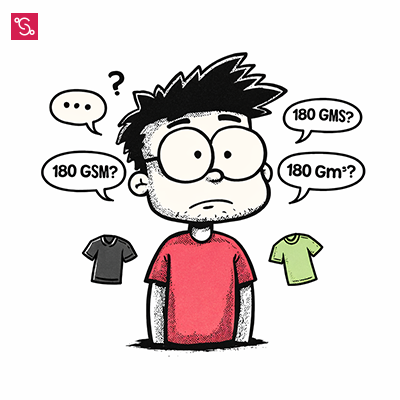
T‑SHIRT GSM EXPLAINED (NO YAWN GYAN)
If you’ve ever heard someone say “180 GSM” and nodded like you understood… same.
But here’s the bigger confusion we see all the time: GSM vs GMS. They sound similar, but they’re not the same thing—and mixing them up can mess up your expectations on quality, pricing, and even shipping weight.
GSM = fabric weight (grams per square metre)
Higher GSM usually feels thicker and more premium. Lower GSM feels lighter and more breathable.
GMS = garment weight (grams)
This is the weight of the finished t‑shirt, and it changes based on size, style (regular/oversized/polo), and yes—fabric GSM too.
Why this matters (in real life)
Use GSM when deciding: “Will this tee feel thin, normal, or premium?” Use GMS when deciding: “How heavy will the final tee be for packing and shipping?”
Lightweight vs Midweight vs Heavyweight (quick guide)
Lightweight (lower GSM): great for summer events, giveaways, big quantities. Midweight (medium GSM): the safest all-rounder for most corporate orders. Heavyweight (higher GSM): best for premium onboarding kits and merch-style tees people re-wear.
Myth: “Lower GSM = poor quality”
Not always. Lower GSM just means lighter fabric, not automatically bad fabric. A well-made low GSM tee can feel great for summer events and still hold up fine. The real question is the use case: for outdoor events, lighter GSM can actually be the smarter choice. For premium kits and re-wear value, mid/heavy GSM usually wins.
GSM + branding (printing/embroidery)
GSM helps, but your branding method matters too. Printing is great for bold visibility; embroidery can feel more premium and long-lasting. If you’re not sure, share your logo and usage—we’ll recommend what will actually hold up.
In short
Choosing the right t‑shirt GSM is one of the simplest ways to upgrade your branded merchandise—and knowing the difference between GSM vs GMS keeps expectations (and budgets) sane.