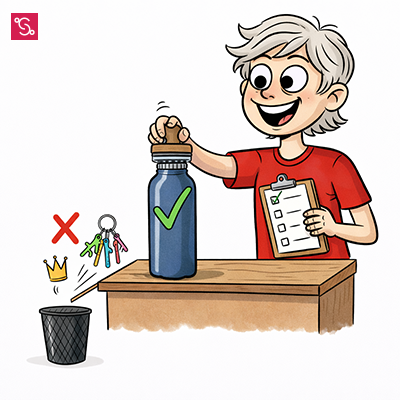
THE TRASH CAN TEST: WHY SOME SWAGS GET KEPT (AND OTHERS GHOSTED)
Most corporate swag doesn’t get thrown away immediately. It gets stored, then forgotten, then quietly binned during the next desk clean-up. That’s the Trash Can Test.
If someone wouldn’t keep it on their desk (or use it weekly), it’s already halfway to the trash.
Why swag fails (even when it looks “fine”)
Swag usually fails for one of these reasons:
- It’s not useful (no daily role)
- It’s low quality (feels disposable)
- It’s generic (no identity, no pride)
- It’s inconvenient (too big, too fragile, too “meh”)
The 3 questions that predict “kept vs binned”
- 1) Does it have daily use?
If it naturally fits into someone’s routine, it survives. -
2) Does it have desk value?
Would someone keep it visible on their desk? If yes, it becomes a brand reminder. -
3) Would they take it home?
If it’s “home-worthy”, it’s automatically higher value.
What passes the Trash Can Test (almost every time)
- Good quality drinkware (people actually use)
- Comfortable apparel (not scratchy, not weird fit)
- Clean notebooks + pens (that don’t feel cheap)
- Useful tech (when it’s reliable, not gimmicky)
- Smart onboarding kits (curated, not clutter)
What usually fails (unless done really well)
- Random trinkets with no use
- Low-quality fabric items
- “One-size-fits-none” apparel
- Items that feel like ads, not gifts
The simple upgrade that changes everything
- Pick fewer items, but make them better.
- A small kit that gets used beats a big kit that gets ignored.
In a nutshell
The best swag isn’t the one that looks good in a vendor catalog. It’s the one that survives Monday morning.